
Powered By



 Continue with Facebook
Continue with Email
Continue with Facebook
Continue with Email
If you have a history of trauma, you know how much it can affect your overall health and well-being.
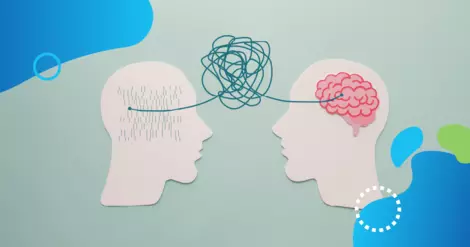
Experiencing trauma in your childhood can cause brain changes that may raise the risk of certain mental health conditions, including schizophrenia. However, going through a traumatic event does not directly cause schizophrenia.
Fortunately, there are treatment options available to help with recovery and lower your risk of complications.
Trauma means experiencing a traumatic event, like violence, a car accident, losing a loved one, or any event that caused you significant distress.
Possible causes of trauma can include:
While trauma can’t cause schizophrenia on its own, it can raise a person’s risk for developing it.
Schizophrenia is a serious mental health disorder that affects how you think and act. People with schizophrenia may experience hallucinations (when you see or hear things that aren’t actually there) and delusions (when you hold beliefs that aren’t true).
People who experience trauma as children, such as abuse or neglect, may be more likely to be diagnosed with schizophrenia if they are already at risk for it. A 2022 review found that people with schizophrenia are 2.7 times more likely to have a history of childhood trauma than those without it. 
There are many different factors that can raise your risk of developing schizophrenia.
Childhood trauma is the most significant environmental risk factor. An environmental risk factor refers to any element relating to your environment, such as your diet, living conditions, or family, that increases your risk of developing a certain condition.

The connection between childhood trauma and schizophrenia depends on several factors, including when the trauma happened and how long it lasted.
People who experienced frequent abuse in their home are at a much higher risk of schizophrenia than those who didn’t. Children who don’t receive support or treatment for their trauma are more likely to develop schizophrenia.
A 2025 review found that people with a history of childhood trauma are more likely to have hallucinations as adults. Childhood trauma causes severe stress that puts a person’s brain into a vulnerable state. This makes it more likely that they’ll experience a mental health condition as an adult.
Experiencing abuse or neglect as a child can slow or prevent brain development. It can also cause physical changes in the brain that make it harder to cope with stress.
Going through significant stress as a child may increase how much cortisol your body makes. Cortisol is often referred to as “the stress hormone” and having too much of it may increase your risk of schizophrenia.
During childhood, you learn how to relate to and connect with others. If your caregivers are unable to provide safe and loving care, you may have trouble forming relationships as an adult.
People who had neglectful parents or caregivers are less likely to seek support when needed. They may also develop an avoidant, or resistant, attachment style, which also makes it difficult to form close relationships.
While trauma can raise your risk of developing schizophrenia, trauma alone cannot directly cause the condition. There are other factors that can contribute.
Trauma is one of the environmental factors that could play a role in the development of schizophrenia. Being exposed to viruses or malnourishment during fetal development could also increase your risk.
A family history of schizophrenia is a strong risk factor. People who have a close relative, such as a parent or sibling, with schizophrenia are six times more likely to develop it themselves.
Research shows that your genes make up 80 percent of your risk for schizophrenia. Your genes contain DNA that tells your cells how to function and multiply. When there’s a mutation (change) in a gene, it can lead to the development of health conditions like schizophrenia.
People with altered levels of dopamine or glutamate (chemicals in the brain) may have a higher risk of mental health conditions.
Additionally, using substances that have mind-altering effects, such as alcohol or drugs, can change your brain chemistry and raise your risk of schizophrenia. Research shows that using marijuana can increase the risk of psychosis, especially if you begin using it at a young age.
Going through a traumatic event can affect you in several ways. You may experience both physical and mental symptoms. Some of these symptoms may appear similar to some schizophrenia symptoms.
Both trauma and schizophrenia can cause the following changes in a person’s behavior:
It’s normal to experience certain symptoms, such as nightmares or flashbacks, after a traumatic event. If these and other symptoms continue for more than a month, you may have post-traumatic stress disorder (PTSD).
Possible symptoms of trauma or PTSD include:
People with schizophrenia usually experience psychosis, which means having thoughts or perceptions that aren’t in touch with reality.
Symptoms of psychosis may include:
Unfortunately, childhood trauma is common. A 2022 review reported that about 25 percent of people experience child abuse or neglect as children. Experiencing violence as a child can have lifelong effects.
Fortunately, it’s possible to lower the risk of mental health problems. The key to preventing complications is early diagnosis and treatment.
However, diagnosing childhood trauma can be challenging because many people are unable to remember it. This happens when the brain tries to protect a person from experiencing a high amount of stress.
Trauma-informed care focuses on creating a safe environment for a person who has experienced trauma.
A person who has a history of childhood trauma may benefit from one of the following types of therapy:
Providing therapy and a safe environment for children who have experienced trauma can help lower the risk of future mental health problems. If a person starts to show signs of psychosis, early diagnosis and treatment can help.
A person who shows early signs of psychosis after trauma may receive Coordinated Specialty Care (CSC). This treatment approach involves support from a physician, mental health provider, case manager, and peers.
There are several treatment options available for psychosis, and they are usually more effective when started as soon as possible. It’s critical to remember that trauma is not your fault, and there is help available.
On MyDepressionTeam, people share their experiences with mental health, get advice, and find support from others who understand.
Have you ever experienced an episode of psychosis? Let others know in the comments below.
Get updates directly to your inbox.



 Continue with Facebook
Continue with Email
Continue with Facebook
Continue with Email
Continue with Facebook
Continue with Email
Continue with Facebook
Continue with Email
Become a member to get even more





 Join
Join

 Your Privacy Choices

This is a member-feature!
Sign up for free to view article comments.
We'd love to hear from you! Please share your name and email to post and read comments.
You'll also get the latest articles directly to your inbox.