
Powered By



Depressive disorders come in many shapes and sizes. The Diagnostic and Statistical Manual of Mental Disorders, 5th Edition, Text Revision (DSM-5-TR) recognizes eight types of depressive disorders. Two of these — major depressive disorder (MDD) and persistent depressive disorder (PDD) — can present in similar ways. Overlapping symptoms, such as feelings of sadness and loss of interest, can make it hard to separate these types of depression. So, how do mental health professionals tell these mental health conditions apart?
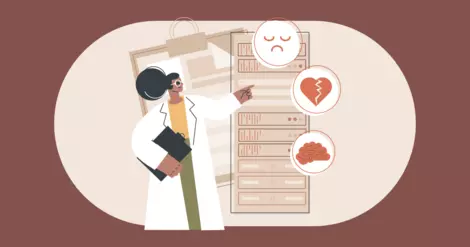
Both MDD (also called clinical depression) and PDD can cause low mood. Other shared symptoms like feelings of hopelessness, low energy, and changes in appetite can make these forms of depression hard to separate and diagnose. But there are key differences that set these depressive disorders apart from each other.
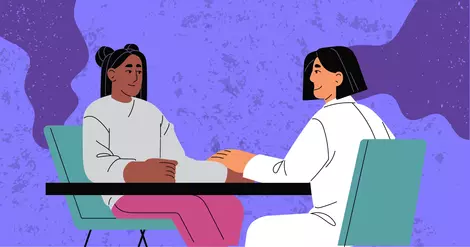
Here, we discuss four ways in which MDD and PDD are different, including how these two forms of depression are diagnosed, who they tend to affect, and how they can impact daily life.
MDD requires more symptoms to be present at one time than PDD. For healthcare providers to diagnose MDD, either a depressed mood or loss of pleasure or interest in activities must be present almost every day, for the majority of the day, over a period of two weeks. Four or more other depression symptoms must also be present almost every day, including:

These symptoms must represent a marked difference from someone’s previous emotional state and functional level. In addition, symptoms must not be due to other medical conditions or substance use.
Note: If you or someone you know needs help, you can contact the 988 Suicide & Crisis Lifeline by calling or texting 988 or chatting online.
In contrast, PDD requires only two or more symptoms to occur together with depressed mood, including:
Major depressive episodes are characterized by symptoms that are present for at least two weeks at a time. Symptoms must also be severe enough to cause impairments in daily functioning or significant distress.
PDD is identified by a depressed mood that lasts for at least two years for adults or one year for children or adolescents. PDD requires that symptoms be persistent — meaning they need to be present for more days than not, and they don’t resolve for longer than two months at a time. PDD combines two former diagnoses — dysthymic disorder and chronic major depressive disorder. Dysthymia was defined as a type of chronic, low-grade depression.
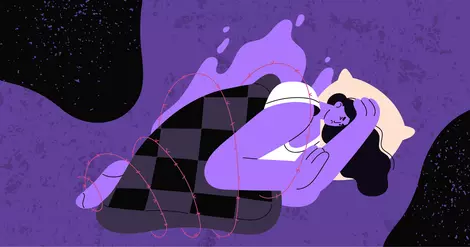
An onset of MDD symptoms over a short period of time can significantly impact someone’s ability to function and go about their daily activities. As one MyDepressionTeam member with MDD shared, “Missed work because I couldn’t get out of bed. Overwhelming feelings of hopelessness.” Another replied, “That used to happen to me sometimes, too, when I still worked. Or I’d wake up late and have such a bad panic attack that I’d have to call in sick. Then I’d feel extremely guilty for missing work.”
On the other hand, PDD tends to present with milder depression symptoms that are ongoing. Someone with PDD may look to others as though their baseline mood is always low or down.
However, it’s also possible for someone to have MDD in addition to PDD — sometimes referred to as double depression. In this case, symptoms are chronic and may seem to worsen for periods of time.
Major depressive disorder is a common diagnosis. In 2008, MDD was ranked as one of the top three diseases impacting quality of life worldwide. The disorder is estimated to affect over 5 percent of people globally. In the U.S., about 21 percent of adults will experience MDD at some time in their lives. Women are diagnosed with MDD about twice as often as men, according to Mayo Clinic.
Because PDD is a newer diagnosis, there’s less data available about who it affects. Dysthymia and chronic major depressive disorder — the two diagnoses that were combined to create the PDD diagnosis — were estimated to impact 0.5 percent and 1.5 percent of people, respectively, over one year as per the DSM-5-TR. One Swiss study found that PDD with major depressive episodes was present in 15.2 percent of people studied, and PDD with pure dysthymia was present in 3.3 percent.
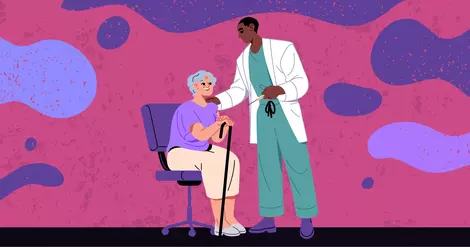
Treatment options for both MDD and PDD usually involve a combination of medication and psychotherapy (talk therapy), such as cognitive behavioral therapy (CBT), in addition to lifestyle changes. Treatment for MDD may focus on reducing symptoms during an episode or preventing relapse. PDD management, on the other hand, may be a longer-term treatment plan geared toward sustained support.
Certain medications are prescribed to treat both MDD and PDD. These include:
Though these conditions may be treated with the same types of medication, some research suggests that treatment might be less effective for people with PDD. However, this could be due to things like delayed diagnosis, not being treated for long enough, and general feelings of hopelessness. One study that looked at people with MDD with and without PDD over 10 years found that having PDD in addition to MDD was linked to more severe MDD symptoms, longer treatment time, and a reduced chance of remission. Those with PDD may also need to take medication for a longer time to remain stable.
Talk therapy can be helpful for people with both conditions. In particular, talk therapy can help break down negative thought patterns and behaviors, teach coping strategies, and help with realistic goal setting.
PDD is a newer diagnosis, so treatments for it are still being studied. Right now, PDD treatment research is focused on strategies to help increase motivation and social skills, develop empathy, address past traumas, and overcome avoidant tendencies.
On MyDepressionTeam, people share their experiences with depression, get advice, and find support from others who understand.
Were you diagnosed with major depressive or persistent depressive disorder? Let others know in the comments below.
Get updates directly to your inbox.


 Continue with Facebook
Continue with Email
Continue with Facebook
Continue with Email
Continue with Facebook
Continue with Email
Continue with Facebook
Continue with Email
Become a member to get even more





 Join
Join


 Your Privacy Choices

This is a member-feature!
Sign up for free to view article comments.
I’ve been diagnosed with mdd practically all my life, but it seems to be getting worse as I get older. Now, I’m having panick attack even in my sleep. I’m going to find another psychiatrist and see… read more
We'd love to hear from you! Please share your name and email to post and read comments.
You'll also get the latest articles directly to your inbox.