
Powered By



 Continue with Facebook
Continue with Email
Continue with Facebook
Continue with Email
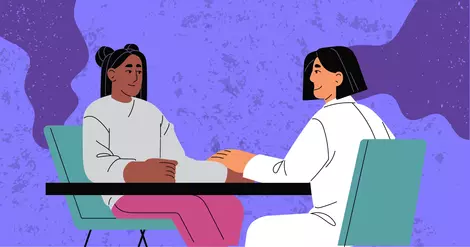
Adjustment disorder overlaps with major depressive disorder (MDD) in some significant ways, but there are also some important differences between the two mental health conditions. If you’ve experienced one or both of these conditions, you probably know these differences well. If not, it can be important to understand how they compare. This is especially true if you’ve just been diagnosed with one of these conditions or if you’re currently seeking a diagnosis.
Here’s what you need to know about some of the similarities and differences between adjustment disorder and MDD. This information will help you have an informed conversation with your healthcare provider about the next steps for you or your loved one.
MDD and adjustment disorder might seem like the same condition, but there are several differences between them. This information can be useful if you have one of these conditions or if you’re seeking a diagnosis.
Adjustment disorder is a response to something specific that happens in your life. These events can be anything that causes you stress, like losing a job, getting a divorce, or you or a family member having a major illness. In adjustment disorder, the response to the stress is more intense and causes more problems for you than would usually be expected.
Major depressive disorder (MDD) can also start in relation to a stressful life event, but it doesn’t have to. MDD is believed to be caused by a combination of biological traits, genes you inherited from your parents, hormones, and brain chemistry. Often, people don’t know what caused a depressive episode.
This is one of the major features that doctors use to distinguish between these two conditions. If you’ve had a major life stressor in the last three months and your struggles seem related to that, you’ll likely be diagnosed with adjustment disorder. Your provider will evaluate you to make sure your symptoms aren’t tied to a normal grief process or another mental disorder.
The duration of an adjustment disorder often depends on how long the stressor remains in your life and how well you learn to cope with it. Most of the time, it only lasts a few months, at the most. Officially, symptoms of adjustment disorder start within three months of a stressful event and end within six months after the stressor is gone. However, ongoing stressors may cause adjustment disorder to last much longer.
In contrast, MDD may come and go in episodes and require long-term treatment. You may experience one or multiple episodes of MDD during your lifetime. During these episodes, you’re likely to experience symptoms of depression every day or close to it.

People who have experienced both adjustment disorder and MDD during their lives report that the two conditions feel different. They describe adjustment disorder as involving negative feelings that are directly related to the specific stressor they are facing.
In MDD, on the other hand, negative feelings tend to become more widespread. People with MDD may feel disconnected from their experiences, and these negative feelings can become a problem, rather than being linked to a specific stressful event.
People who have experienced both adjustment disorder and MDD have also reported different ways of thinking with each diagnosis. While rumination — repetitive, negative thoughts — happens in both, the focus of these thoughts differs significantly.
In adjustment disorder, people have found themselves ruminating on the stressor that caused their issues. They may repeatedly think about events related to that stress and try to find solutions. They may feel frustrated if their attempts to fix the issue are unsuccessful.
In MDD, rumination may revolve around larger, more existential questions. People may struggle to find meaning in life and feel stuck in thoughts that make life feel less hopeless and meaningless. Many also report trouble with motivation. The repetitive thoughts tend to focus more on life overall rather than a specific event or stressor.
People living with adjustment disorder report more variation in their feelings and moods compared to those with major depressive disorder. While people with adjustment disorder do experience significant negative emotions, such as sadness and anxiety, these feelings can fluctuate. For instance, some people find that focusing on a task can temporarily improve their mood.
They don’t usually report feeling apathetic. Instead, they express sadness or anxiety much of the time. Many also recognize they can still feel happy and enjoy things outside of their stressor.
In contrast, people with MDD experience more persistent feelings of sadness that rarely lift. People with MDD often report feeling as if they will be sad and hopeless forever. Over time, this can lead to a sort of numbness, where they might not feel much of anything — including sadness. This state is described as feeling apathetic or empty, making it difficult to connect with their emotions.
People with adjustment disorder can usually connect their mood problems directly to their stressor. Because of this, they tend to remain hopeful that they’ll feel better when that stress goes away. Many express a desire for this change, as it would mean returning to feeling more like themselves and enjoying life again. They often understand that their feelings won’t continue to worsen forever.
On the other hand, for those with MDD, hope often feels impossible, and hopelessness becomes overwhelming. People report feeling like a failure and like the world is too much. Many believe their situation will never improve and start to expect that they’ll continue to feel worse.
There are also some important similarities between adjustment disorder and MDD. These similarities can make diagnosis difficult.
There’s a lot of overlap between the symptoms of adjustment disorder and the symptoms of MDD. These may include:
If you’re in immediate danger, call 911. In the U.S., call or text 988 or chat at 988lifeline.org to reach the Suicide & Crisis Lifeline. Help is free and available 24/7.
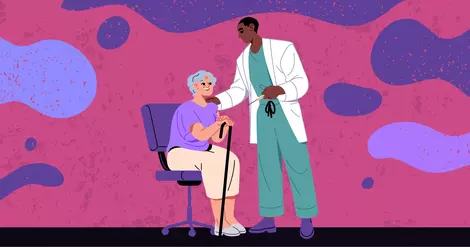
If you’re experiencing these symptoms and they aren’t shifting or improving, talk to a healthcare provider. They can help you get the care and treatment you need to feel better again.
Treatment strategies for adjustment disorder and MDD are similar, too. They usually involve psychotherapy and may also include medications, depending on the severity of your condition.
Therapy, such as talk therapy or cognitive behavioral therapy, can be helpful for a number of reasons:
Medications, like antidepressants, can help you feel and function better, too. Your psychiatry team will help you figure out which medications may be helpful, especially if your symptoms are affecting your daily life or causing you distress. Your psychiatry team will also make sure you have the support you need and are on a safe and effective dosage of your medication. Never start, stop, or change the dosage of any of these medications without talking to your doctor. Making drastic changes to some of these medications can make you feel ill.
If you’re experiencing feelings of sadness, irritability, or other symptoms of either adjustment disorder or major depressive disorder, talk to a mental health professional right away. They can help you get the treatment you need, regardless of your diagnosis, to help improve your depressed mood and make progress toward feeling good again. They can also help you if you have other mental health conditions.
On MyDepressionTeam, people share their experiences with depression, get advice, and find support from others who understand.
How have you experienced adjustment disorder as similar to or different from MDD? Let others know in the comments below.
Get updates directly to your inbox.


 Continue with Facebook
Continue with Email
Continue with Facebook
Continue with Email
Continue with Facebook
Continue with Email
Continue with Facebook
Continue with Email
Become a member to get even more





 Join
Join

 Your Privacy Choices

This is a member-feature!
Sign up for free to view article comments.
The article was very informative
We'd love to hear from you! Please share your name and email to post and read comments.
You'll also get the latest articles directly to your inbox.